
Spirituality: Your Path to Inner Alignment
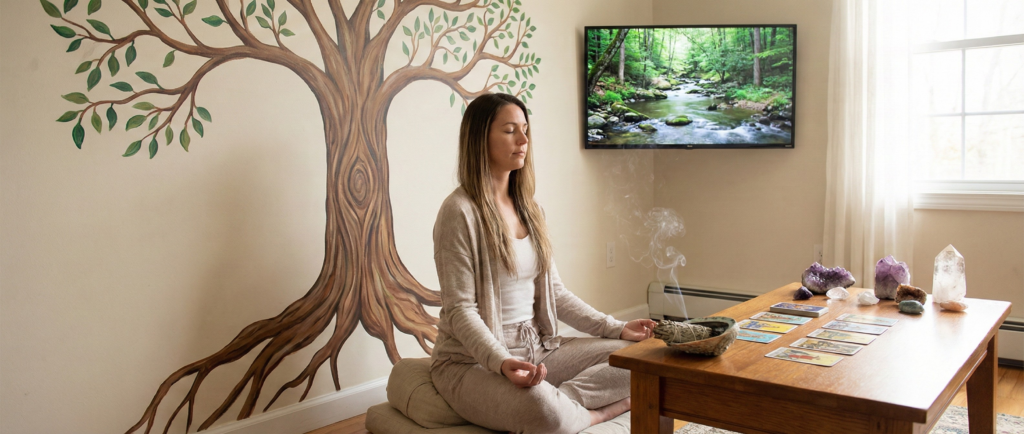
Spirituality is the journey of coming home to yourself. Unlike religion, which often provides a specific map of rules and dogmas, spirituality is an open invitation to explore your direct connection with the Universe. It is the deep, resonant knowing that there is something greater than the physical world—a divine intelligence that flows through you and connects all living things.
Beyond the Physical: Understanding the Shift
In our modern, fast-paced lives, it is easy to feel fragmented—disconnected from our purpose and drained by daily demands. The spiritual path offers a remedy: **Alignment**. When you align your vibration with your higher self, life stops feeling like a struggle upstream and begins to flow. This “awakening” is not about becoming a different person; it is about stripping away the layers of fear and conditioning to reveal the radiant authentic self that has been there all along.
There is no single “right” way to walk this path. For some, the door opens through the silence of meditation; for others, it is found in the ancient wisdom of the stars or the grounding rhythm of daily rituals. Your journey is unique. Explore the sacred realms below to discover the practices that resonate with your soul’s current season.
Explore The Sacred Realms
Discover the sacred paths that bring peace, clarity, and divine connection to your daily life.
Spiritual Wellness
Align your energy and elevate your vibration through holistic living and soul care.
Read More →Meditation & Mind
Quiet the noise. Discover deep peace through breathwork and mindful awareness.
Read More →Sacred Rituals
Connect with your divinity through daily affirmations, journaling, and ceremony.
Read More →Your Cosmic Sign
Decode the unique energetic signature of your soul's blueprint and destiny.
Read More →Signs You Are Experiencing a Spiritual Awakening
Awakening is not a destination; it is an unfolding. As your consciousness expands, you may notice subtle yet profound shifts in your reality. It often begins with **Synchronicity**—seeing repeating numbers or meaningful coincidences that defy logic. You might feel a sudden pull toward solitude, preferring the quiet of nature over crowded social spaces. These are not random symptoms; they are indicators that your intuition is sharpening, turning down the volume of the outside world so you can finally hear the guidance from within.
Synchronicity & Patterns: You frequently see repeating numbers like 111, 222, or 777 on clocks and receipts.
Deepening Intuition: Your “gut feeling” becomes undeniable, and you find yourself knowing things before they happen.
Seeking Solitude: You feel a strong need to disconnect from noise and spend time alone or in nature to recharge.
Questioning the Status Quo: Old beliefs, career paths, or relationships that once fit perfectly now feel out of alignment.
Physical Sensitivity: You may experience sudden waves of energy, vivid dreams, or a sensitivity to loud environments and processed foods.
Inner Peace over Success: The drive for material status begins to fade, replaced by a deep craving for meaning, purpose, and emotional freedom.
- The Call to Shadow Work: You begin to uncover repressed emotions or past traumas that need healing. This process, known as shadow work, is not about punishment but about integrating the darker parts of your psyche to become whole again.
Spiritual Tools & Sacred Modalities
The path to awakening is an inner journey, but you do not have to walk it unaided. Throughout history, seekers have used sacred tools to focus their intention, clear their energy, and deepen their connection to the divine. Whether it is the vibration of a crystal, the mathematical truth of numerology, or the ancient wisdom of astrology, these modalities act as powerful amplifiers. They are not magic wands, but mirrors—reflecting the intuition and wisdom that already lives within you.
At the core of these modalities lies the ancient system of chakra healing. Your spiritual body is anchored by seven spinning energy centers—from the root at the base of your spine to the crown above your head—that dictate your emotional and physical equilibrium. Keeping these centers aligned is essential; when your chakras are open, energy flows freely, allowing you to maximize the benefits of the sacred tools listed below.
Crystal Healing
Amplify energy and promote healing using the earth's natural stones.
Sacred Geometry
Unlock the ancient patterns that reveal the blueprint of divine creation.
Sound Healing
Restore harmony to your vibration using frequencies like 432 Hz.
Astrology
Decode your soul's map through the movements of the planets.
Numerology
Understand the mathematical code that defines your life path.
Tarot Readings
Use intuitive tools to reflect on your subconscious and find clarity.
Cultivating Sacred Space: Daily Spiritual Self-Care
Spirituality is not just a concept you study; it is a practice you live. Just as you wash your physical body, your energetic body requires daily maintenance to stay clear and vibrant. You do not need hours of deep meditation to see results. The most powerful changes often come from simple, intentional acts that shift your frequency instantly. By weaving these small rituals into your routine, you transform the mundane into the magical and keep your inner light burning bright.
Morning Gratitude: Start your day by writing down three things you are thankful for. This anchors your mind in abundance before the chaos of the world rushes in.
Energetic Cleansing: Use sage, palo santo, or even sound (like a bell or clapping) to clear stagnant energy from your home and workspace.
Conscious Grounding: When you feel overwhelmed, take five minutes to walk barefoot on grass or visualize roots extending from your feet deep into the earth.
Setting Boundaries: Protect your peace by visualizing a shield of white or golden light around you before entering crowded or stressful environments.
Nature Connection: Step outside daily to breathe fresh air. Aligning with the natural rhythm of the earth is the fastest way to reset your nervous system.
Evening Reflection: End your day by reviewing your emotions without judgment, releasing what does not belong to you, and setting an intention for restful sleep.
🧘 Integrating Spirituality into Daily Life
Spirituality isn’t a practice reserved only for meditation or weekend retreats; it’s a profound way of life. Research consistently shows that living a spiritual life is correlated with better physical and mental health, including lower stress and increased resilience. The true power lies in bringing mindfulness and sacred awareness into your everyday routines. This means recognizing the divine spark within yourself and in every interaction, from preparing a meal with gratitude to handling a challenge with compassion. When you choose conscious action over autopilot reaction, you strengthen your inner light. This shift allows you to move through the world with greater clarity, purpose, and peace. By honoring your energetic boundaries, practicing stillness, and consistently seeking alignment, you actively co-create a reality that reflects your highest values. Ultimately, the spiritual path is about transforming the ordinary into the extraordinary, reminding you that your inner state is your most powerful tool for connection and well-being. This journey toward inner freedom is ongoing, unfolding with every moment of presence and intention.
The Do’s and Don’ts of Your Spiritual Journey
Awakening is a personal path, but there are universal guardrails to keep you aligned. Follow these to navigate your growth with clarity.
- Do Trust Your Intuition: Teachers and books are helpful guides, but your inner voice is the ultimate authority. Listen to it.
- Do Stay Grounded: Spiritual growth requires a strong foundation. Keep one foot in the stars and one foot firmly on the earth.
- Do Practice Consistency: Transformation doesn't happen overnight. Small, daily rituals are more powerful than occasional grand gestures.
- Do Question Everything: True spirituality is about finding *your* truth, not blindly following a new set of rigid rules.
- Don’t Compare Journeys: Someone else's path may look faster or "more enlightened" on social media. Your timing is unique to you.
- Don’t "Spiritual Bypass": Never use positivity or manifestation to ignore real pain, trauma, or emotions. You must feel it to heal it.
- Don’t Judge Others: Being spiritual means practicing compassion. Judgment lowers your vibration and blocks connection.
- Don’t Rush the Process: Awakening is a spiral, not a straight line. Be patient with yourself when you feel stuck or lost.
Frequently Asked Questions on Spirituality
1. How is spirituality different from religion?
This is one of the most common questions. Religion typically involves organized beliefs, specific dogmas, and communal worship directed toward a specific deity. Spirituality, however, is an individual and personal journey. It focuses on your direct connection to the universe, inner wisdom, and higher self, without requiring adherence to a specific set of rules or institutions. You can be spiritual without being religious, or you can be both.
2. What are the physical and emotional symptoms of a spiritual awakening?
A spiritual awakening can feel intense. Common signs include a sudden desire for solitude, feeling “disconnected” from old friends or habits, vivid dreams, and increased sensitivity to noise or crowds. You might also experience physical symptoms like ringing in the ears, changes in sleep patterns, or sudden waves of emotion as your energetic vibration shifts and expands.
3. How do I start a spiritual journey as a beginner?
There is no “right” way to begin, but the best first step is mindfulness. Start by spending 5–10 minutes a day in silence or meditation to observe your thoughts. You can also explore tools like journaling, gratitude practice, or reading books on spiritual growth. The key is to shift from “doing” to “being” and to start listening to your own intuition rather than external noise.
4. What is the "Dark Night of the Soul"?
This term refers to a difficult phase of spiritual growth where you may feel lost, depressed, or empty. It often happens just before a major breakthrough or awakening. While it feels painful, it is actually a period of deep purging where old ego structures and outdated beliefs are falling away to make room for a higher level of consciousness.
5. How can I protect my energy from negativity?
Spiritual people are often highly empathetic and can absorb emotions from others. To protect your energy, practice “grounding” (walking barefoot on grass or visualizing roots connecting you to the earth) and “shielding” (visualizing a bubble of white light around you). setting clear boundaries—learning to say “no” without guilt—is also a vital spiritual practice.
6. Do I need tools like crystals or tarot to be spiritual?
No, tools are supportive but not required. Items like crystals, sage, or oracle cards can help focus your intention and amplify your energy, but true spirituality comes from within. Your breath, your intention, and your awareness are the most powerful tools you have. Use external objects only if they genuinely help you feel more connected.
Continue Your Spiritual Journey
Deepen your understanding with these handpicked guides that bridge mindfulness, astrology, and awakening.
Your Spiritual Journey: A Practical Guide
Understand the stages of awakening and learn how to walk your path with intention and clarity.
Spiritual Awakening: Signs & How to Navigate It
Recognize the signs of awakening and discover practical ways to integrate your spiritual transformation.

Astrology for Spiritual Growth
Explore how planetary patterns reflect your soul’s lessons and help you align with your higher purpose.
Manifestation & The Law of Attraction
Learn the art of conscious creation and attract abundance through focused energy and spiritual practice.