
Tarot Spreads for Beginners: How to Read Tarot Cards with Confidence
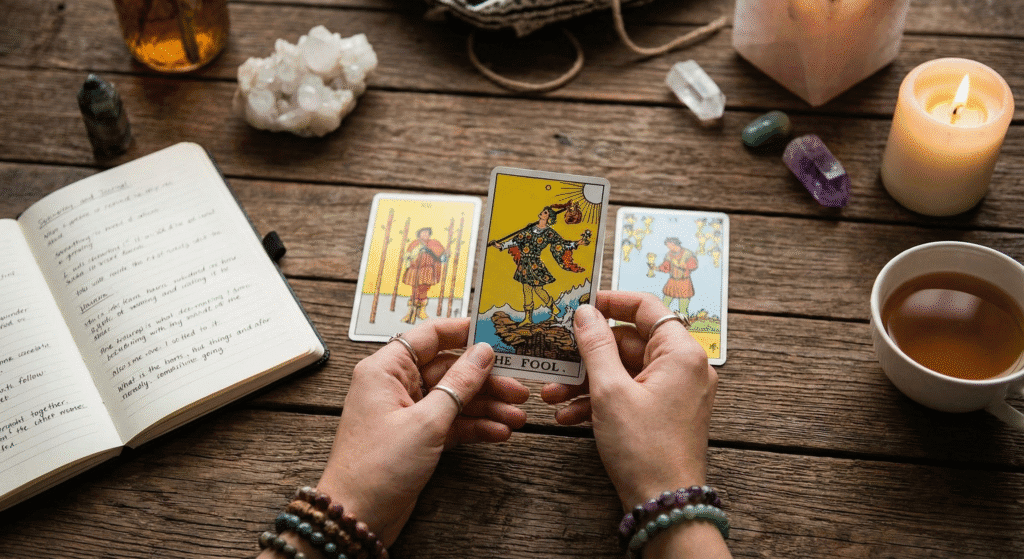
Tarot cards have captivated the human imagination for centuries, serving as both a mirror to the subconscious and a profound tool for spiritual insight. Whether you are seeking daily guidance, creative inspiration, or deep self-discovery, learning to read tarot is a transformative journey. This comprehensive guide is designed to help you understand tarot from the ground up—from the fundamental structure of the deck to interpreting the cards and performing confident, accurate readings.
Table of Contents
ToggleTarot Reading for Beginners: Unlocking Your Intuition
Many people stepping into this practice ask how to read tarot cards without constantly pausing to check a guidebook. The secret lies in balancing traditional esoteric knowledge with your own personal intuition. Learning tarot is essentially like learning a new language—one where ancient symbols, colors, and archetypes combine to tell a unique story. It is not just about memorizing definitions; it is about connecting with your subconscious mind.
Today, tarot has transcended its origins as a 15th-century European card game. Modern practitioners use it not to predict a rigid, unchangeable future, but to explore possibilities, uncover subconscious patterns, and inspire personal growth. By practicing daily and learning to trust your initial gut feelings, the process transforms from a rigid memory test into a fluid, empowering spiritual dialogue.
Understanding Tarot Card Meanings and Deck Structure
Before drawing your first card, it is essential to understand the architecture of the deck. A standard Rider-Waite-Smith tarot deck—the most highly recommended deck for beginners due to its clear, intuitive imagery—consists of 78 cards. These are divided into two major sections:
The Major Arcana (22 cards): Representing life’s big, overarching lessons, karmic influences, and major spiritual archetypes.
The Minor Arcana (56 cards): Reflecting everyday experiences, temporary emotions, and passing challenges.
Major Arcana Meanings: The 22 Keys to Life’s Journey
The Major Arcana represents the macro-journey of the soul—often referred to as “The Fool’s Journey”—from total innocence to ultimate enlightenment. Each card carries deep, foundational symbolism.
0. The Fool: Symbolizes new beginnings, spontaneity, and innocence. The Fool encourages you to trust your instincts and take a leap of faith.
I. The Magician: Represents manifestation, skill, and resourcefulness. You have all the tools necessary to turn your dreams into reality.
II. The High Priestess: The ultimate symbol of intuition, mystery, and the subconscious mind. She encourages you to trust your inner wisdom over external noise.
III. The Empress: Represents fertility, creativity, and abundant growth. A card of nurturing feminine energy and deep connection with nature.
IV. The Emperor: Symbolizes authority, structure, and control. Encourages discipline, strong leadership, and setting firm boundaries.
V. The Hierophant: Represents tradition, spiritual wisdom, and conformity. Points to learning from established systems, mentors, or traditional institutions.
VI. The Lovers: Signifies love, harmony, and crucial choices. It is not just about romance; it is about aligning your values and making heart-centered decisions.
VII. The Chariot: Represents willpower, determination, and control. Success will come through absolute discipline and focused momentum.
VIII. Strength: Symbolizes courage, inner strength, and patience. A reminder that gentle persistence and compassion can overcome brute force.
IX. The Hermit: Represents introspection, solitude, and spiritual enlightenment. Encourages stepping back from the world for reflection and self-discovery.
X. Wheel of Fortune: Symbolizes fate, karma, and natural cycles. Life is in constant motion—embrace both the highs and the lows as necessary phases.
XI. Justice: Represents fairness, truth, and the law of cause and effect. A reminder that all actions have consequences.
XII. The Hanged Man: Symbolizes surrender, gaining a new perspective, and letting go. Sometimes, true progress requires a period of deliberate pause.
XIII. Death: Rarely a literal physical death, this card represents profound transformation, necessary endings, and the clearing of old energy for rebirth.
XIV. Temperance: Symbolizes balance, harmony, and moderation. Encourages blending opposing forces to create peace and alchemy.
XV. The Devil: Represents temptation, toxic attachments, and illusion. Encourages you to break free from self-limiting beliefs or codependent habits.
XVI. The Tower: Symbolizes sudden change, upheaval, and revelation. Though disruptive and shocking, it clears away false foundations to allow for authentic growth.
XVII. The Star: Represents hope, deep spiritual healing, and inspiration. Encourages absolute faith in the future after a period of darkness.
XVIII. The Moon: Symbolizes illusion, anxiety, and the shadowy subconscious. A warning that not everything is as it currently seems; trust your intuition.
XIX. The Sun: Represents success, pure joy, and vitality. The most positive card in the deck, signaling happiness and brilliant achievement.
XX. Judgement: Symbolizes awakening, renewal, and profound reflection. Encourages forgiving the past and embracing your higher calling.
XXI. The World: Represents completion, wholeness, and ultimate fulfillment. A major karmic cycle ends successfully, and a new one prepares to begin.
Minor Arcana Meanings: Navigating Everyday Life
The Minor Arcana consists of 56 cards that highlight the day-to-day nuances of our lives. They are divided into four elemental suits, each containing ten numbered cards and four Court Cards (Page, Knight, Queen, King).
Suit of Cups (Element: Water)
Focuses on emotions, intuition, relationships, and the language of the heart.
Ace of Cups: New emotional beginnings, overflowing love, or a surge of creative inspiration.
Two of Cups: Deep partnership, harmony, and mutual connection.
Three of Cups: Celebration, joyful friendship, and community support.
Four of Cups: Apathy, contemplation, or ignoring the opportunities right in front of you.
Five of Cups: Grief, loss, regret, and the need for emotional healing.
Six of Cups: Nostalgia, childhood memories, innocence, and pure kindness.
Seven of Cups: Overwhelming choices, illusions, and wishful thinking.
Eight of Cups: Walking away from what no longer serves you, spiritual seeking, and emotional withdrawal.
Nine of Cups: Contentment, deep satisfaction, and emotional fulfillment (the “wish” card).
Ten of Cups: Absolute happiness, family harmony, and emotional completion.
Page of Cups: A messenger of creative inspiration, intuition, and emotional openness.
Knight of Cups: Romanticism, charm, and fiercely following the heart.
Queen of Cups: Boundless compassion, empathy, and emotional maturity.
King of Cups: Perfect emotional balance, diplomacy, and calm control.
Suit of Pentacles (Element: Earth)
Focuses on the physical and material world—career, finances, health, and tangible legacy.
Ace of Pentacles: A grounded new financial opportunity, physical health, or long-term prosperity.
Two of Pentacles: Finding balance and adaptability in practical, day-to-day matters.
Three of Pentacles: Collaboration, masterful craftsmanship, and successful teamwork.
Four of Pentacles: Material security, financial control, or an unhealthy possessiveness.
Five of Pentacles: Temporary financial hardship, isolation, or feeling left out in the cold.
Six of Pentacles: Generosity, charity, and the balanced cycle of giving and receiving.
Seven of Pentacles: Patience, investment, and assessing the long-term vision of your hard work.
Eight of Pentacles: Dedicated skill development, focus, and ultimate mastery of a craft.
Nine of Pentacles: Self-sufficiency, enjoying luxury, and hard-earned independence.
Ten of Pentacles: Lasting legacy, generational wealth, and complete family stability.
Page of Pentacles: Ambition, focused study, and the physical manifestation of a new opportunity.
Knight of Pentacles: Unwavering reliability, routine, and slow but steady diligence.
Queen of Pentacles: Nurturing, supreme practicality, and earthly resourcefulness.
King of Pentacles: Massive wealth, business leadership, and unshakeable financial security.
Suit of Swords (Element: Air)
Represents intellect, logic, communication, and the inevitable conflicts of the human mind.
Ace of Swords: Absolute clarity, a mental breakthrough, and the undeniable truth.
Two of Swords: Indecision, a mental stalemate, or actively avoiding a difficult choice.
Three of Swords: Heartbreak, sudden sorrow, or piercing emotional pain.
Four of Swords: The need for deep rest, mental recovery, and quiet contemplation.
Five of Swords: A harsh conflict, tension, or a hollow, costly victory.
Six of Swords: A necessary transition, slow healing, and mentally moving toward calmer waters.
Seven of Swords: Deception, strategy, stealth, or keeping secrets.
Eight of Swords: Self-imposed restriction, paralyzing fear, or mental entrapment.
Nine of Swords: Severe anxiety, worry, nightmares, and sleeplessness.
Ten of Swords: Painful endings, betrayal, and hitting absolute rock bottom (with nowhere to go but up).
Page of Swords: Endless curiosity, sharp intellect, and hyper-vigilance.
Knight of Swords: Aggressive action, fierce ambition, and impulsiveness.
Queen of Swords: Fierce independence, sharp perception, and cutting clarity.
King of Swords: Absolute authority, objective logic, and commanding truth.
Suit of Wands (Element: Fire)
Focuses on raw creativity, fast action, spiritual passion, and drive.
Ace of Wands: A burst of inspiration, exciting new beginnings, and raw potential.
Two of Wands: Careful planning, making a major decision, and casting a long-term vision.
Three of Wands: Expansion, accurate foresight, and watching your plans progress.
Four of Wands: A joyous celebration, stability, and returning to harmony.
Five of Wands: Petty competition, chaotic challenge, and conflicting egos.
Six of Wands: Public victory, well-deserved recognition, and shining achievement.
Seven of Wands: Fierce perseverance, self-defense, and holding your ground with courage.
Eight of Wands: Rapid speed, sudden momentum, and fast-paced communication.
Nine of Wands: Battle-tested resilience, persistence, and setting protective boundaries.
Ten of Wands: Carrying a heavy burden, taking on too much responsibility, and hard work.
Page of Wands: Fearless enthusiasm, exploration, and the discovery of a new passion.
Knight of Wands: Thrilling adventure, explosive energy, and highly impulsive action.
Queen of Wands: Radiant confidence, natural charisma, and unshakable determination.
King of Wands: Grand vision, charismatic leadership, and bold execution.
Step-by-Step Guide: How to Read Tarot Cards
Learning tarot is a blend of dedicated study and intuitive practice. Follow this beginner-friendly process to start reading with confidence today.
Step 1: Choose and Connect with Your Deck Select a deck that visually resonates with you. Before your first reading, cleanse the deck’s energy by smudging it with sage, placing a clear quartz crystal on top of it, or simply knocking on the deck three times. Spend time shuffling the cards daily to infuse them with your unique energetic signature.
Step 2: Formulate a Strong Question The quality of your answer depends on the quality of your question. Avoid simple “yes or no” inquiries. Instead of asking, “Will I get the job?”, phrase it as an open-ended exploration: “What energy do I need to embody to align with my ultimate career goals?”
Step 3: Shuffle and Draw Shuffle the cards while holding your question firmly in your mind. Cut the deck when you feel instinctively ready, and draw your cards.
Step 4: Analyze and Interpret Do not immediately reach for the guidebook. First, look at the imagery. What colors stand out? What is the character in the card doing? Note your immediate physical and emotional reaction. Only after checking your intuition should you cross-reference the traditional definitions.
Step 5: Synthesize the Story A reading is more than a list of isolated definitions—it is a cohesive narrative. Look at how the cards interact. Are the figures facing each other? Is there a dominance of one specific suit? Weave the meanings together to deliver a fluid, actionable message.
Step 6: Journal Your Findings Always record your readings. Writing down the cards you pulled and your subsequent interpretations helps cement the meanings in your mind and allows you to track your intuitive accuracy over time.
The Best Tarot Spreads for Beginners
A “spread” is simply the specific layout you use to place your cards. Here are the most effective layouts for those just starting out:
The One-Card Pull: Perfect for a quick, daily energetic check-in. Ask the deck, “What is my primary focus for today?”
The Three-Card Spread: The ultimate foundational layout. This highly versatile spread is most commonly read as: Past / Present / Future, or Situation / Action / Outcome, or Mind / Body / Spirit.
The Career Spread (3-5 Cards): Focuses specifically on your professional trajectory, highlighting current challenges, hidden opportunities, and the best next step to take.
The Relationship Spread (3-5 Cards): Explores the energetic dynamics between two people. Cards are usually assigned to represent You, The Other Person, and The Current State of the Connection.
The Celtic Cross Spread: A classic, comprehensive 10-card spread. While it is slightly more advanced, it is the gold standard for diving deep into complex, multi-layered situations.
Frequently Asked Questions
1. Can I learn how to read tarot cards without memorizing every meaning?
Yes! While learning the foundational framework is helpful, tarot is largely about intuition. Many beginners start by simply looking at the imagery—the colors, symbols, and facial expressions—to interpret the message. Trusting your immediate gut feeling is just as important as reading the traditional guidebook.
2. Do I need to be "psychic" to read the cards?
Not at all. Tarot is a psychological and spiritual tool for self-reflection, not necessarily literal fortune-telling. Anyone can master the cards with patience and practice. The deck works by helping you bypass your conscious mind to tap into the deep, intuitive wisdom you already possess.
3. What is the best way to practice daily?
Consistency is key to mastering this art. Pull a single card every morning with a simple prompt like, “What energy do I need to navigate today?” This builds a highly personal connection with your deck and naturally sharpens your interpretative skills over time without overwhelming you.
4. Is it a bad omen if I draw "scary" cards like Death or The Devil?
No; in fact, these are often the most misunderstood cards in the deck. In the context of a reading, “Death” rarely means physical harm; it almost always signifies profound transformation, necessary endings, and the birth of a new chapter. Similarly, “The Devil” points to the shadow self—urging you to break free from unhealthy habits, addictions, or toxic relationships. They are powerful invitations to grow, not curses.
5. Is there a psychological basis for reading tarot cards?
Yes, many modern practitioners approach the deck from a purely psychological perspective rather than a mystical one. The imagery found throughout the Major Arcana aligns closely with universal human archetypes, a framework pioneered by psychoanalyst Carl Jung. Rather than predicting a fixed future, the cards act as visual prompts that help you bypass your conscious mind to uncover hidden thoughts and tap into your own internal problem-solving abilities. If you are interested in the science of the subconscious, exploring Carl Jung’s theories on archetypes provides a fascinating lens for understanding why these ancient symbols still resonate so deeply with us today.
6. Are there specific tarot spreads for beginners that make learning easier?
Yes, absolutely. When you are first learning how to read tarot cards, jumping straight into massive, ten-card layouts can easily overwhelm your intuition and leave you feeling confused. The most effective tarot spreads for beginners are simple one- to three-card pulls, such as a “Past, Present, Future” layout or a daily “Mind, Body, Spirit” check-in. These smaller, highly focused readings allow you to practice weaving a cohesive story and understand how the cards interact with one another before you tackle more complex, advanced spreads.
Your Tarot Journey Begins Now
Stepping into the world of tarot is an ongoing journey of self-discovery, spiritual growth, and intuitive empowerment. The most important thing to remember is that there is no single perfect way to read the cards; your unique perspective and life experiences are exactly what bring the deck to life. If you want to observe how these esoteric symbols weave together into a cohesive narrative before you start pulling for yourself, experiencing a free tarot reading can provide valuable insight into the natural flow of a session. As your daily practice deepens and your confidence in the deck grows, taking the time to thoroughly study the profound archetypal lessons of the Major Arcana tarot cards will further unlock your intuitive potential. Keep your mind open, trust your inner voice, and let the cards illuminate your path forward.
About the Author
Cosmic Signs Daily Editorial Board
The Cosmic Signs Daily Editorial Board ensures every article is researched, fact-checked, and reviewed for accuracy. Our team relies on precise astronomical data to provide grounded and reliable spiritual guidance.
Follow our journey on Pinterest.
Disclaimer
The information provided in this article is intended for educational and reflective purposes only. Astrology is interpretive and symbolic in nature; it should not be regarded as a guarantee of outcomes. This content does not constitute professional financial, legal, medical, or psychological advice. Decisions remain solely your responsibility. For guidance on specific circumstances, please consult a qualified professional. Read full Terms & Conditions.