Sacred Practices: Everyday Ways to Reconnect with the Sacred in a Busy World

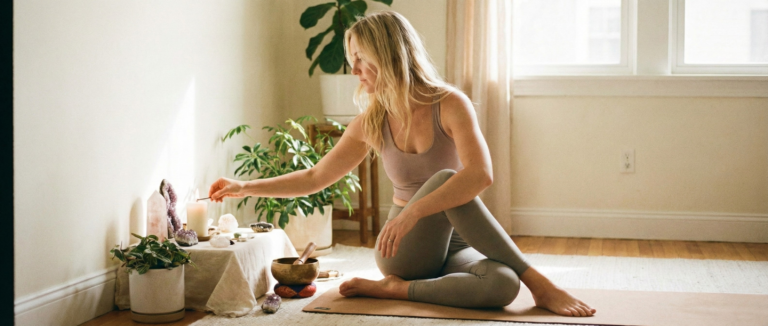
Blonde woman performing sacred practices by lighting a candle in a serene room.

There’s a quiet hunger many of us carry — a longing for meaning, for grounding, for something real beneath the rush of daily life. We scroll endlessly, chase goals, meet deadlines, and yet, somewhere inside, there’s a whisper: “There must be more than this.”

That whisper is the beginning of the sacred.
And sacred practices are how we answer it.


What Are Sacred Practices?

Sacred practices aren’t limited to temples, rituals, or religion. They are the simple, intentional acts that bring presence, reverence, and connection back into our ordinary lives.

Lighting a candle with awareness.
Breathing deeply before you speak.
Sharing a meal in gratitude.
Sitting in silence under a tree.

These moments — quiet, humble, human — become sacred when we meet them with attention and respect.

At its core, a sacred practice is anything that helps you:

  • Feel connected to something larger than yourself.
  • Remember your values and sense of purpose.
  • Experience the beauty of being alive in this exact moment.

You don’t need incense or chants (though you can use them). What makes something sacred is how you meet it — with presence, intention, and care.


The Essence of the Sacred

The word “sacred” comes from the Latin sacer, meaning “to set apart.”
In other words, what’s sacred isn’t necessarily holy because of rules — it’s holy because we choose to treat it differently.

When you slow down to really taste your morning tea instead of gulping it, that moment becomes sacred.
When you speak to someone with full attention instead of distraction, that exchange becomes sacred.
When you create time to breathe, pray, walk, or write — not as a task, but as a devotion — that space becomes sacred.

Sacredness is not something far away; it’s right here, waiting to be noticed.


Why Sacred Practices Matter in Modern Life

We live in an age of overstimulation. Every day we consume more information than our grandparents did in a month. We multitask constantly — and in doing so, we often forget how to be.

Sacred practices are not nostalgic escapes; they’re antidotes.
They help us return to rhythm, to presence, to meaning.

1. They help us remember what’s real

Sacred practices pull us out of autopilot. They remind us to feel our lives rather than just rush through them. When you pause to breathe or light a candle, you’re saying — “This moment matters.”

2. They restore inner balance

Even five minutes of conscious silence or prayer can reset your nervous system. Sacred moments soothe what endless scrolling and striving cannot. They bring a kind of peace that doesn’t depend on circumstances.

3. They connect us to others

Shared sacred practices — from family rituals to community gatherings — weave invisible threads between hearts. They remind us that life is not meant to be faced alone.

4. They nurture meaning

Sacred practices help us build lives that feel coherent. They anchor us in something deeper than goals — a quiet “why” that steadies us through change.


Different Forms of Sacred Practice

There’s no single “right way.” Sacred practice can take countless forms — what matters is sincerity. Here are some timeless paths people use to stay connected to the sacred:

1. Silence and Stillness

Silence is one of the oldest sacred practices. In stillness, the mind softens and awareness deepens. Whether through meditation, prayer, or simply sitting quietly, stillness creates space for your inner voice to emerge.

Try it: Sit for five minutes a day with no goal except to notice your breath. When your mind wanders, gently return to the rise and fall of your chest. That simple act can open a world within.


2. Nature as a Temple

You don’t have to go far to experience the sacred. Step outside. Notice the wind on your face, the sound of leaves, the pattern of clouds.

Nature mirrors life’s rhythm — growth, decay, renewal — and teaches surrender better than any book.
Walk without earbuds. Watch the sunrise. Touch the bark of a tree. Feel yourself as part of something vast and ancient.


3. The Sacredness of Work

Work becomes sacred when done with devotion, not distraction. Whether you’re cooking, coding, or cleaning, treat the act as a form of offering.

When your mind and hands move together in full presence, even ordinary work becomes prayer.


4. Journaling and Reflection

Writing can be a sacred practice — a conversation with your soul. You don’t have to be eloquent. Just honest.

Try asking yourself:

  • What feels alive in me today?
  • What am I grateful for?
  • What do I need to release?

As ink meets paper, the scattered thoughts of the mind often settle into quiet clarity.


5. Rituals of the Everyday

Rituals transform routine into reverence.
Light a candle before starting your day. Offer a silent blessing before eating. Stretch before bed while reflecting on the day’s lessons.

Rituals remind the heart: life itself is sacred.


6. Movement and Embodiment

Dance, yoga, walking meditation, mindful stretching — all are ways of remembering that spirit and body are not separate.

When you move consciously, you release energy and reconnect with your vitality. Each breath, each step, becomes a rhythm of prayer.


7. Service and Compassion

One of the most powerful sacred practices is simple kindness. Helping someone, listening deeply, giving without seeking recognition — these acts sanctify ordinary life.

The sacred lives wherever compassion is practiced.


Creating Your Own Sacred Practice

There’s beauty in learning from tradition — but the most powerful sacred practices are the ones you make your own. Here’s how to start:

Step 1: Ask what you long for

Do you crave peace? Connection? Clarity? Gratitude?
Let your longing guide you. Your need determines your practice.

Step 2: Choose one small daily act

Start simple — something you can actually sustain. It could be lighting a candle, sitting quietly for three breaths, or journaling each morning.

Consistency is more important than complexity.

Step 3: Create space for it

Set aside a specific time and place — even a corner of a room. When you return to that same space repeatedly, it becomes charged with presence.

Step 4: Protect it like something sacred

Turn off your phone. Let others know this time matters.
If you treat your practice as sacred, it becomes so.

Step 5: Reflect, adjust, and grow

What brings peace today may evolve tomorrow. Let your practices shift as your life does. The point isn’t perfection — it’s connection.


The Inner Attitude Behind Sacred Practice

You can perform a ritual flawlessly and still miss its spirit. The true essence of a sacred practice is not in the form, but in the attitude.

Here are three guiding attitudes that breathe life into every practice:

1. Presence

Be where you are.
Whether washing dishes or meditating, do it with your whole attention. Presence transforms ordinary acts into gateways of grace.

2. Gratitude

Gratitude shifts perception from lack to abundance. Even small moments — a cup of tea, a kind word, a breath — can become sacred when received with thanks.

3. Reverence

Reverence doesn’t mean solemnity — it means respect. It’s the quiet recognition that life, in all its mess and mystery, deserves tenderness.


The Science of the Sacred (Why It Works)

While sacred practices have spiritual roots, their effects are very real. Modern research echoes what ancient wisdom knew:

  • Meditation and prayer reduce stress, lower blood pressure, and enhance focus.
  • Gratitude rituals increase happiness and emotional resilience.
  • Mindful movement improves physical health and mood.
  • Acts of compassion release oxytocin — the “bonding hormone” — strengthening connection and empathy.

In other words, sacred practices don’t just elevate the soul — they balance the mind and heal the body.


Integrating Sacred Practices into Daily Life

It’s easy to imagine sacred practice as something separate from ordinary living — but the magic happens when it blends seamlessly into your day.

Here’s what that can look like:

  • Begin your morning not by checking your phone, but by breathing consciously for one minute.
  • Bless your food before you eat.
  • Pause once an hour to stretch or express gratitude.
  • End your day by releasing what no longer serves you.

Tiny rituals, repeated daily, reshape the texture of life. They turn chaos into rhythm, noise into music.


Obstacles You Might Face (and How to Move Through Them)

“I don’t have time.”

Start with one minute. Truly. Sacredness isn’t measured by duration, but by depth of attention.

“I feel silly doing rituals.”

That’s okay. We live in a culture that glorifies logic and productivity — reverence can feel strange at first. Trust that what nourishes your heart is valid.

“I can’t stay consistent.”

Be gentle with yourself. Missing a day isn’t failure — it’s part of the rhythm. The sacred is patient. It waits for your return.

“I don’t know what I believe.”

You don’t need fixed beliefs to engage in sacred practice. The practice itself often reveals what you believe — not as dogma, but as lived truth.


Examples of Simple Sacred Practices

Here are a few you might explore or adapt to your life:

Practice How to Begin Intention
Morning silence Sit quietly for five minutes upon waking. To greet the day consciously.
Candle lighting Light a candle before work or prayer. To bring light and intention into action.
Gratitude jar Write one thing daily you’re thankful for. To remember life’s abundance.
Mindful meal Eat one meal in silence, tasting each bite. To honor nourishment and presence.
Walking meditation Walk slowly, feeling each step and breath. To reconnect body, breath, and earth.
Evening release Before bed, note one thing to let go of. To rest in peace, not pressure.

The Gift of Sacred Living

When sacred practices become part of your life, you begin to see differently.
Moments once dismissed as ordinary — the sound of rain, a smile from a stranger, the warmth of sunlight — take on a quiet glow.

You realize spirituality isn’t separate from daily living; it is daily living — done consciously, lovingly, reverently.

Sacred practice doesn’t remove life’s challenges. But it helps you meet them with steadiness and grace. It reconnects you to what endures when everything else shifts: your awareness, your breath, your heart.


Final Thoughts

The sacred is not somewhere else — it’s right here, hidden in plain sight, waiting in every heartbeat, every moment, every breath.

Your morning routine, your commute, your conversations — all can become sacred when infused with attention and care.

So light that candle. Take that breath. Write that reflection. Bless your meal.
Not because you “should,” but because you can.

The sacred isn’t about escaping the world.
It’s about remembering that the world itself — and your life within it — has always been sacred.

Cosmic Signs Daily Logo

About the Author

Cosmic Signs Daily Editorial Board

The Cosmic Signs Daily Editorial Board ensures every article is researched, fact-checked, and reviewed for accuracy. Our team relies on precise astronomical data to provide grounded and reliable spiritual guidance.

Follow our journey on Pinterest.

Disclaimer

The information provided in this article is intended for educational and reflective purposes only. Astrology is interpretive and symbolic in nature; it should not be regarded as a guarantee of outcomes. This content does not constitute professional financial, legal, medical, or psychological advice. Decisions remain solely your responsibility. For guidance on specific circumstances, please consult a qualified professional. Read full Terms & Conditions.

← Previous
Next →