
The Ultimate Guide to Hellenistic Astrology: Ancient Star Wisdom for the Modern World
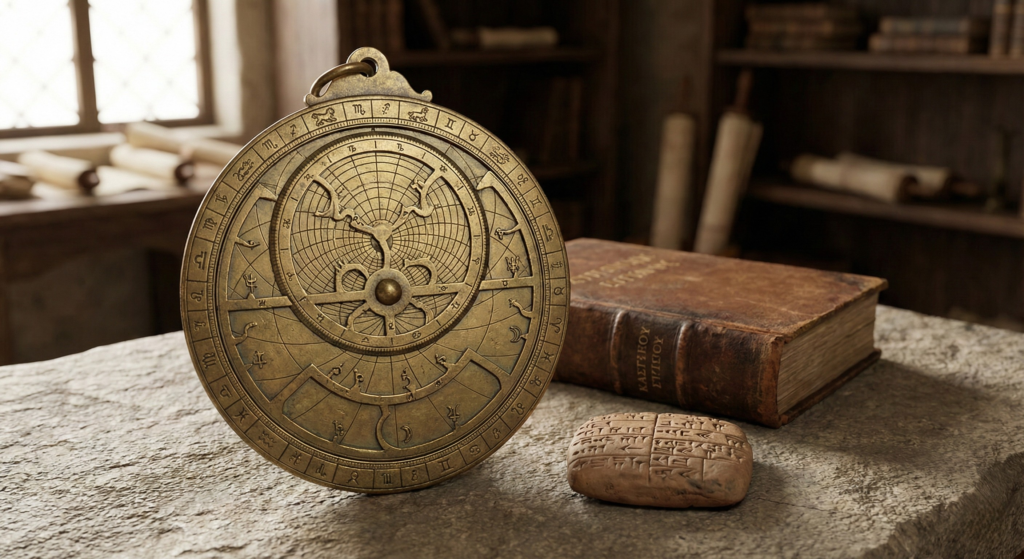
In the age of smartphone apps and bite-sized daily horoscopes, it is easy to forget that the practice of astrology has roots stretching back thousands of years. Long before it became a tool for psychological self-reflection, astrology was a highly structured, philosophically profound system used to understand fate, time, and the divine order of the universe.
At the very heart of this ancient wisdom lies the tradition that birthed the natal chart as we know it today. This guide explores the origins, mechanics, and powerful predictive techniques of this ancient system, and explains why it is experiencing a massive revival among modern practitioners worldwide.
Table of Contents
ToggleExploring the Roots: What is Hellenistic Astrology?
Hellenistic astrology is the foundational tradition of Western astrology that was developed and practiced in the Mediterranean region during the Hellenistic period, roughly spanning from the 2nd century BCE to the 6th century CE. It emerged in cultural melting pots like Alexandria, Egypt, where Babylonian observational astronomy, Egyptian spiritual traditions, and Greek philosophical thought combined into a brilliant, cohesive system.
Before this era, astrologers largely looked at the sky to predict mundane events for kings and nations. Hellenistic astrologers revolutionized the practice by introducing the concept of the natal chart—a mathematical snapshot of the heavens at the exact moment of an individual’s birth. To these ancient practitioners, the cosmos was a living, breathing entity, and the planets were divine actors. By understanding the cosmic weather at your birth, you could understand the architecture of your destiny.
The Foundation of the Chart: Whole Sign Houses
If you have ever looked at your birth chart on a modern app, you may have noticed that the “houses” (the pie slices representing different areas of life) are often uneven, with some signs awkwardly split across multiple houses. This is due to complex modern calculation systems like Placidus.
Ancient astrologers favored a much cleaner, more elegant approach: Whole Sign Houses. In this system, the exact degree of your Ascendant (Rising Sign) determines your first house, and that entire zodiac sign becomes the first house. The next sign becomes the second house, and so on.
For example, if you are a Virgo Rising, the entirety of Virgo is your first house of self, the entirety of Libra is your second house of finances, and the entirety of Scorpio is your third house of communication. This method eliminates intercepted signs and provides immediate, striking clarity when interpreting how the planets interact with different domains of your life. Its mathematical simplicity and incredible accuracy are major reasons why modern astrologers are returning to it.
Hellenistic vs Modern Astrology: Understanding the Shift
To truly grasp the power of ancient techniques, it helps to understand how the practice has evolved. When comparing Hellenistic vs Modern astrology, the differences lie deeply in philosophy, focus, and core goals.
-
Philosophical Focus: Modern Western astrology, shaped heavily by 20th-century psychology and Carl Jung, is humanistic. It views the birth chart as a map of your internal psyche, focusing on character development, psychological complexes, and free will. Hellenistic practice is rooted in Stoic and Platonic philosophy. It is more deterministic, viewing the chart as a map of your external life circumstances, concrete events, and fate.
-
The Planetary Roster: Modern astrology uses all the planets, including the outer planets discovered via telescope (Uranus, Neptune, and Pluto), assigning them rulership over specific signs. The Hellenistic system relies exclusively on the seven traditional, visible planets (Sun, Moon, Mercury, Venus, Mars, Jupiter, and Saturn) for sign rulership, believing these original cosmic actors provide the most structurally sound framework for prediction.
-
The Ultimate Goal: A modern reading often seeks to answer the question, “How can I evolve my personality?” An ancient reading seeks to answer, “What is the structural promise of my life, and how can I align my actions to work harmoniously with that fate?”
Unlocking the Year: The Power of Annual Profections
One of the most fascinating aspects of traditional practice is its reliance on “Time Lord” techniques. These methods view time not as a straight line, but as a series of meaningful, cyclical chapters ruled by specific planets.
Annual Profections is one of the most accessible and accurate Time Lord techniques available. In this system, your Ascendant (the first house) represents your first year of life (age 0). On your first birthday, the focus moves to your second house. On your second birthday, it moves to the third house, and so on, moving one sign per year in a continuous 12-year cycle.
Whatever house is activated in a given year becomes the focal point of your life, and the planet that rules that house becomes your “Time Lord” for the year. For example, if you enter a profection year that lands in your 10th house of career, and that house is in Taurus (ruled by Venus), Venus becomes your primary cosmic guide for the year. Any movements Venus makes in the sky will acutely impact your life, bringing themes of career, reputation, and perhaps financial partnerships to the forefront.
Zodiacal Releasing: Mapping the Chapters of Your Life
For those looking for a profoundly detailed roadmap of their destiny, ancient astrologers utilized an advanced Time Lord technique known as Zodiacal Releasing. This method was largely lost to history until it was translated and revived for the modern world over the last two decades.
Zodiacal Releasing divides your entire life into distinct chapters and sub-chapters, much like reading a biography. Instead of looking at the planets in the sky right now, it uses mathematical points in your birth chart (known as the Lot of Fortune and the Lot of Spirit) to calculate specific periods of time.
It is incredibly effective for mapping out long-term career trajectories, major periods of health or physical changes, and significant shifts in life direction. By calculating your Zodiacal Releasing periods, you can pinpoint the exact years you are meant to lay foundational groundwork, the years you will experience intense preparation, and the “peak” years where your life’s work reaches its maximum visibility and impact.
The Spiritual Gift of Ancient Wisdom
The resurgence of these ancient techniques is not just a trend; it is a return to the structural roots of cosmic timing. In a fast-paced world that constantly demands we hustle and force our way to the top, Hellenistic astrology offers a deeply comforting alternative.
It teaches us that life has a rhythm, that certain years are meant for resting and others for building, and that we are participants in a grand, beautifully ordered universe. By learning the ancient language of the stars, we can stop fighting the cosmic tides and start moving in harmony with our truest, most authentic destiny.
Frequently Asked Questions
1. What is the main difference when comparing Hellenistic vs Modern astrology?
The primary distinction lies in their philosophical goals. Modern astrology is deeply psychological, focusing on character development, inner growth, and navigating free will. In contrast, Hellenistic astrology is rooted in ancient philosophies, focusing on the structural blueprint of your life, predicting concrete external events, and understanding your cosmic fate so you can live in harmony with it.
2. Why does this ancient system use Whole Sign Houses?
Ancient practitioners relied on Whole Sign Houses for their elegance and mathematical clarity. Instead of splitting zodiac signs across multiple houses—which often happens in modern calculation systems like Placidus—the exact sign of your Ascendant becomes your entire first house. This method provides immediate, striking accuracy when reading a birth chart and entirely eliminates the confusion of intercepted signs.
3. How do Time Lord techniques like Annual Profections work?
Time Lord systems are advanced predictive tools that divide your life into specific chapters. Annual Profections is a highly accessible method that moves the focus of your chart forward one house every year on your birthday, revealing which specific planet acts as your cosmic guide for that year. For more profound, long-term life mapping, astrologers use Zodiacal Releasing to identify major peak periods in career and personal destiny. To better understand the rich cultural and intellectual era that birthed these incredible mathematical techniques, you can explore this comprehensive overview of the Hellenistic Period by the World History Encyclopedia.
Reclaiming Your Cosmic Blueprint
Hellenistic astrology is much more than a historical artifact; it is a profound, living tradition that offers unparalleled clarity in a chaotic world. By stripping away modern complexities and returning to the foundational mechanics of the stars, we can view our lives not as a series of random events, but as a beautifully structured cosmic design. Whether you are seeking precise timing for your next career move or a deeper understanding of your soul’s journey, embracing this ancient star wisdom allows you to navigate your destiny with confidence, purpose, and profound peace.
About the Author
Cosmic Signs Daily Editorial Board
The Cosmic Signs Daily Editorial Board ensures every article is researched, fact-checked, and reviewed for accuracy. Our team relies on precise astronomical data to provide grounded and reliable spiritual guidance.
Follow our journey on Pinterest.
Disclaimer
The information provided in this article is intended for educational and reflective purposes only. Astrology is interpretive and symbolic in nature; it should not be regarded as a guarantee of outcomes. This content does not constitute professional financial, legal, medical, or psychological advice. Decisions remain solely your responsibility. For guidance on specific circumstances, please consult a qualified professional. Read full Terms & Conditions.