
Black and White Spiritual Decor:
25 Ideas for a Calm, Sacred Home
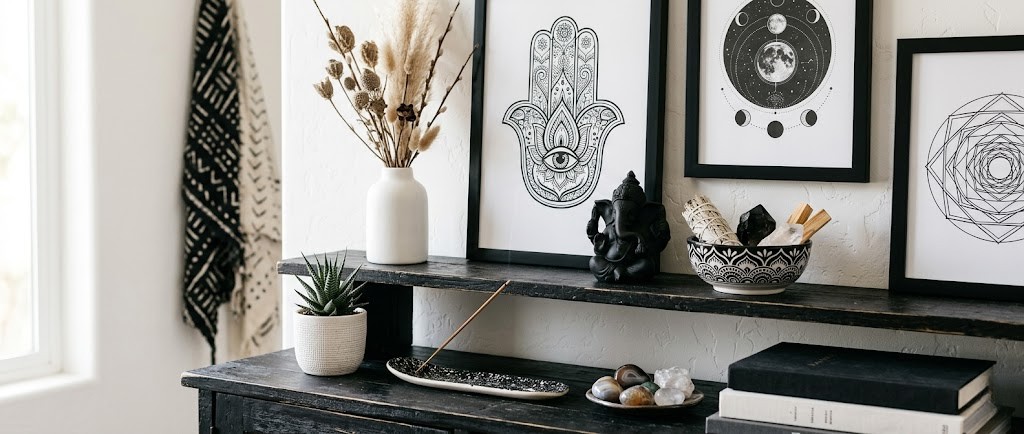
Creating a sanctuary in your home doesn’t require overflowing altars, visual clutter, or loud colors. In fact, one of the most significant shifts in interior design right now is the move toward “monastic design”—an aesthetic that strips away the unnecessary to reveal calm, purpose, and authenticity.
If you are looking to cultivate a sense of peace without sacrificing modern sophistication, exploring spiritual home decor through a monochromatic lens is an incredible way to transform your living space into a quiet refuge.
Table of Contents
ToggleThe Power of Black and White Spiritual Decor
Embracing black and white spiritual decor allows you to step away from the visual noise of everyday life. By limiting your palette, you remove visual overstimulation. This high-contrast aesthetic forces you to focus on texture, form, and light, naturally creating a grounded atmosphere. It is a core principle of mindful interior design, where every object is chosen with intention, ensuring your home remains a sanctuary of deep focus and relaxation.
Here are 25 ideas to bring this aesthetic to life.
Sacred Textures & Materials
When you remove color, texture becomes the soul of the room. Mixing raw, organic materials with refined finishes keeps a monochromatic space from feeling flat or sterile.
Matte Black Stoneware: Swap out glossy ceramics for handcrafted, unglazed black clay bowls or vases. The chalky, imperfect finish feels earthy and grounded.
Whitewashed Wood Altars: Use reclaimed pine or driftwood treated with a simple white wash to serve as a grounding focal point for your spiritual practice.
Charcoal Linen Drapes: Heavy, dark linen framing your windows filters natural sunlight beautifully, creating a moody, introspective atmosphere perfect for deep focus.
White Marble Grounding Trays: A cool, heavy slab of white marble with natural grey veining is the perfect resting place for incense, smudge sticks, or daily intentions.
High-Contrast Crystals: Display raw black tourmaline or onyx alongside polished white selenite towers. This pairing not only looks striking but balances protective and purifying energies.
Wall Art & Mindful Symbolism
Spiritual art doesn’t have to be overly literal. Abstract forms and negative space often leave more room for personal reflection.
Monochromatic Mandalas: Frame intricate, black-on-white geometric line art. The symmetry provides a visual anchor for the eyes during meditation.
Abstract Sumi-e Ink Wash: Hang minimalist brushstroke art. The traditional Japanese technique of using black ink on white paper beautifully captures the essence of nature with just a few strokes.
Textured Plaster Canvas: A solid white, 3D textured plaster canvas adds quiet dimension to a wall, allowing the shifting shadows of the day to become the art itself.
Botanical Silhouettes: High-contrast pressed ferns, lotus flowers, or sage leaves on stark white backgrounds bring the calming energy of nature indoors without disrupting a minimalist palette.
Sacred Geometry Metalwork: Subtle, matte black metal wall hangings depicting the Flower of Life or Sri Yantra offer meaningful symbolism that doubles as modern architectural decor.
Ambient Lighting & Shadows
Lighting dictates the mood of a sacred space. A monochromatic room relies heavily on how shadows play against white walls and dark furniture.
Smoked Glass Sconces: Diffuse harsh bulbs by using smoked grey or black glass fixtures, creating a soft, ambient glow reminiscent of candlelight.
Matte Black Taper Candles: Place tall, slender black candles in heavy iron or raw white ceramic holders. They add immediate ritualistic elegance to a dining table or mantle.
Organic Paper Lanterns: Oversized, asymmetrical white rice paper pendants cast a warm, diffused light that instantly softens the sharp contrasts of a black and white room.
White Himalayan Salt Lamps: Traditional pink salt lamps can disrupt a strict color palette. Opt for the rare white rock salt versions to get the same purifying glow in a crisp, neutral tone.
Shadow-Casting Pendants: Woven black rattan or perforated metal lampshades project intricate geometric shadows onto white walls, turning the light itself into a decorative element.
Altar & Meditation Elements
The items you use for daily grounding should be as beautiful as they are functional, seamlessly blending into your home’s aesthetic. If you are actively curating spiritual decor for a sacred space, these minimalist tools keep the energy clear and focused.
Minimalist Zen Gardens: Swap traditional sand for bright white crushed quartz, paired with smooth, dark basalt river stones for raking and reflection.
Canvas Zafu Cushions: Choose heavy-duty black or cream canvas for your meditation cushions. They offer a clean, modern look that you won’t feel the need to hide in a closet.
Cast Iron Incense Burners: A heavy, black cast iron bowl or Japanese-style burner serves as a durable, fire-safe, and visually striking vessel for resins and stick incense.
Frosted Quartz Singing Bowls: While brass is traditional, white frosted crystal singing bowls provide powerful sound healing and look like modern sculptural art when not in use.
Monochrome Mala Beads: Drape a strand of ebony wood and white howlite beads over a stand or resting in a ceramic dish. They serve as both a tactile meditation tool and a visual reminder of your intentions.
Grounding Textiles & Rugs
To prevent a high-contrast room from feeling cold, you must introduce warmth through heavy, intentional textiles.
Beni Ourain Moroccan Rugs: A plush, cream-colored wool rug with irregular black geometric diamonds softens acoustics and provides a warm foundation for barefoot walking.
Black Bouclé Seating: Introduce a meditation chair or floor sofa in black bouclé. The nubby, looped fabric is incredibly soft and invites you to sit and linger.
Woven Acoustic Tapestries: Thick, black and white woven wall hangings not only add a “Granny Chic” warmth to modern spaces but actively absorb echoes, making the room physically quieter.
Contrast-Stitch Cotton Throws: Keep a crisp, organic white cotton blanket with heavy black whip-stitching draped over your reading chair for chilly mornings.
Charcoal Hemp Floor Cushions: Hemp is highly durable and brings a raw, earthy texture. Large, charcoal-toned floor pillows encourage low-to-the-ground living, which naturally fosters a more grounded state of mind.
Frequently Asked Questions
1. What exactly is mindful interior design?
Mindful interior design is an approach that prioritizes intention, well-being, and clarity over passing trends. It involves curating your space with items that serve a specific function or hold deep personal meaning, ultimately creating an environment that supports relaxation, mental clarity, and spiritual focus rather than overwhelming the senses with clutter.
2. Can a black and white meditation room feel cozy instead of cold?
Absolutely. The key to ensuring a black and white meditation room feels warm and inviting lies in layering organic textures and adjusting the lighting. Using elements like charcoal linen drapes, plush cream Moroccan rugs, woven acoustic tapestries, and soft, diffused ambient lighting (like smoked glass sconces or paper lanterns) prevents the high-contrast palette from feeling sterile or unapproachable.
3. How do I choose the right spiritual home decor for my living room?
When selecting spiritual home decor, focus on items that reflect your personal journey without causing visual clutter. Abstract art, subtle geometric metalwork, natural elements like whitewashed wood or high-contrast crystals, and functional ritual items like cast iron incense burners can integrate seamlessly into modern design while maintaining a grounded energy.
4. Why is black and white spiritual decor so effective for a sacred space?
Black and white spiritual decor minimizes visual overstimulation, a crucial element for creating a sacred space. By removing bright colors, the room naturally directs your focus inward. This monochromatic, “monastic” approach highlights form, texture, and light, allowing the space to feel inherently quiet and deeply grounded, which is perfect for meditation and reflection.
5. I have a small corner to use; how can I incorporate spiritual decor for a sacred space?
Even in a small area, you can effectively integrate spiritual decor for a sacred space by choosing a few high-impact, minimalist pieces. Consider setting up a small white marble grounding tray for daily intentions, a monochromatic mandala print on the wall, and a single frosted quartz singing bowl or strand of monochrome mala beads. Focus on vertical space and keep the area free of unrelated clutter to maintain its intentional energy.
For further insights into how top architects approach minimalist and calming designs, check out this video: Modern Minimalist House Design Secrets. This resource delves into the strategies professionals use to create emotional comfort and profound peace through intentional simplicity, mirroring the principles of mindful, minimalist decor.
Cultivating Your Personal Sanctuary
Designing your sacred space is a deeply personal journey, and refining your home shouldn’t feel like a chore. As you begin to integrate these minimalist principles, remember that perfection isn’t the goal—peace is. Start small by clearing away visual noise and introducing just one or two intentional pieces, like a marble grounding tray or a quiet piece of abstract art. By stripping away the unnecessary, you allow the true energy of your home to surface. Over time, your space will naturally evolve into the quiet, supportive sanctuary you deserve, offering you a daily retreat from the chaos of the outside world.

About the Author
Cosmic Signs Daily Editorial Board
The Cosmic Signs Daily Editorial Board ensures every article is researched, fact-checked, and reviewed for accuracy. Our team relies on precise astronomical data to provide grounded and reliable spiritual guidance.
Follow our journey on Pinterest.
Disclaimer
The information provided in this article is intended for educational and reflective purposes only. Astrology is interpretive and symbolic in nature; it should not be regarded as a guarantee of outcomes. This content does not constitute professional financial, legal, medical, or psychological advice. Decisions remain solely your responsibility. For guidance on specific circumstances, please consult a qualified professional. Read full Terms & Conditions.