
The True Sanpaku Eyes Meaning: Your Spiritual Destiny Revealed
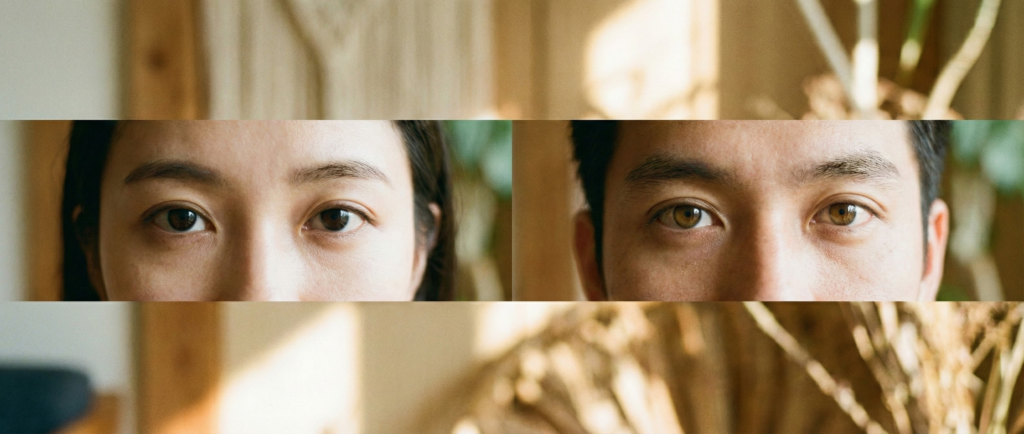
If you have spent any time in the esoteric or spiritual corners of social media lately, you have likely come across the term “Sanpaku eyes.” While the internet loves to turn ancient concepts into viral trends, the true meaning behind Sanpaku goes far deeper than a quick TikTok filter.
Rooted in ancient Japanese physiognomy (face reading) and popularized in the West during the 1960s by macrobiotic pioneer George Ohsawa, Sanpaku is a fascinating tool for understanding your energetic balance, physical health, and even your spiritual destiny.
Whether you are deep into shadow work, exploring your astrology chart, or simply curious about what your physical features reveal about your soul, understanding Sanpaku can offer profound insights into the way you interact with the world around you.
Table of Contents
ToggleWhat Exactly Are Sanpaku Eyes?
The word Sanpaku translates directly from Japanese as “three whites.”
Take a look in the mirror. For most people, when looking straight ahead, the iris (the colored part of the eye) touches the top and bottom eyelids, leaving the sclera (the white of the eye) visible only on the left and right sides.
However, for someone with Sanpaku eyes, the iris is slightly raised or lowered, revealing a third section of white space either above or below the colored portion. According to ancient Eastern philosophy, this physical trait indicates a fundamental imbalance in a person’s ki (or life force energy) and points to specific spiritual and physical challenges.
There are two distinct types of Sanpaku, and they carry very different spiritual meanings.
1. Yin Sanpaku (White Below the Iris)
This is the most common form of Sanpaku. If you look straight ahead and see a sliver of white between the bottom of your iris and your lower eyelid, you have Yin Sanpaku.
The Spiritual Meaning: Yin energy is inherently receptive, passive, and absorbing. When the eyes show Yin Sanpaku, traditional face readers believe the person’s energy is physically pulling downward, ungrounded, and disconnected from the earth.
The Destiny Trap: People with Yin Sanpaku are often seen as deeply intuitive, highly sensitive, and profoundly empathetic—sometimes to a fault. They are the “tragic artist” archetypes. Because their energy is so open, they are believed to be uniquely vulnerable to external dangers, toxic relationships, and psychic vampirism. They often attract chaotic situations because they are unconsciously seeking the groundedness they lack within themselves.
Famous Examples: Princess Diana, Marilyn Monroe, John F. Kennedy, and Billie Eilish.
2. Yang Sanpaku (White Above the Iris)
This type is incredibly rare. If the white of your eye is visible above the iris while looking straight ahead, you have Yang Sanpaku.
The Spiritual Meaning: Yang energy is active, fiery, and projective. When this energy becomes excessive or uncontrolled, it pushes the iris downward. This indicates a spirit that is fiercely disconnected from its own inner calm.
The Destiny Trap: While Yin Sanpaku suggests danger from the outside world, Yang Sanpaku suggests danger from within. People with this trait are often wildly ambitious, intensely focused, and possess a terrifying amount of willpower. However, their spiritual destiny is often plagued by inner turmoil, explosive anger, and a tendency toward self-destruction. Their challenge is learning to temper their extreme internal fire before it burns down their own lives and the people around them.
Famous Examples: Charles Manson is the most frequently cited historical example of Yang Sanpaku.
Is Sanpaku a “Curse”?
It is easy to read the traditional interpretations of Sanpaku and feel a sense of dread. However, from a modern spiritual perspective, Sanpaku is not a curse or a fixed, unavoidable fate. Instead, view it as a spiritual check engine light. Your body is intimately connected to your energetic field. When you are burnt out, ignoring your intuition, or failing to protect your boundaries, your physical body reflects that imbalance. In fact, many people notice that their eyes only become Sanpaku during periods of extreme stress, grief, or spiritual misalignment, and return to normal when balance is restored.
How to Balance Your Energy and Rewrite Your Destiny
If you recognize Sanpaku in your own eyes, it is simply a call to action from your higher self. Here is how you can begin to balance your energy:
Radical Grounding (For Yin Sanpaku): Because Yin Sanpaku indicates an ungrounded spirit, your spiritual work must focus on the root chakra. Practice somatic therapies, spend time walking barefoot in nature, and fiercely audit your relationships. You must learn to build energetic walls to stop absorbing the trauma of others.
Nervous System Regulation (For Yang Sanpaku): If you possess Yang energy, your spiritual work must focus on cooling the fire. Meditation, breathwork, and releasing the need for absolute control are vital. You must learn that true power comes from stillness, not just explosive action.
Holistic Wellness: George Ohsawa originally linked Sanpaku to a highly processed diet and severe nutritional deficiencies. Aligning your physical vessel through whole foods, adequate sleep, and reducing stimulants is the fastest way to pull your life force energy back into equilibrium.
Your physical features are merely the map, not the destination. By recognizing the energetic imbalances your Sanpaku eyes reveal, you reclaim the power to shape your own spiritual destiny.
Frequently Asked Questions
1. What is the fundamental Sanpaku eyes meaning?
While it has become a popular internet aesthetic, the true Sanpaku eyes meaning is deeply rooted in ancient Eastern face reading. When someone has Sanpaku eyes, the sclera (the white part of the eye) is clearly visible either above or below the iris when looking straight ahead. Traditional practitioners view this as a physical indicator that a person’s body, mind, and spirit are currently out of alignment.
2. How do I know if I have Yin sanpaku or Yang sanpaku?
You can easily check by looking straight ahead into a mirror while keeping your head perfectly level. If you see a sliver of white space beneath your colored iris, you have Yin sanpaku. This is the more common variation and suggests you are highly receptive but vulnerable to absorbing external stress. Conversely, if the white space is visible above the iris, you have Yang sanpaku. This is a much rarer trait that points to intense internal ambition and potential emotional volatility.
3. What is the Sanpaku eyes spiritual meaning, and is it a bad omen?
Having this trait is absolutely not a curse or a fixed tragic fate. The Sanpaku eyes spiritual meaning is best understood as a spiritual “check engine light.” It simply alerts you that your life force energy is currently ungrounded. By focusing on holistic wellness—such as regulating your nervous system and exploring the dietary balance advocated by macrobiotic pioneer George Ohsawa—you can actively pull your energy back into equilibrium and shape your own path.
Embracing the True Sanpaku Eyes Meaning
Ultimately, discovering the true Sanpaku eyes meaning isn’t about fortune-telling or fearing a tragic fate. Instead, it is a profound invitation to look closer at how your physical body mirrors your internal energetic state. Whether you carry the receptive depth of Yin or the fierce intensity of Yang, your eyes are simply reflecting where your soul needs the most care and grounding. By using this ancient face-reading wisdom as a modern tool for self-awareness, you can stop fighting your natural energy, protect your spiritual boundaries, and start consciously designing your own destiny.

About the Author
Cosmic Signs Daily Editorial Board
The Cosmic Signs Daily Editorial Board ensures every article is researched, fact-checked, and reviewed for accuracy. Our team relies on precise astronomical data to provide grounded and reliable spiritual guidance.
Follow our journey on Pinterest.
Disclaimer
The information provided in this article is intended for educational and reflective purposes only. Astrology is interpretive and symbolic in nature; it should not be regarded as a guarantee of outcomes. This content does not constitute professional financial, legal, medical, or psychological advice. Decisions remain solely your responsibility. For guidance on specific circumstances, please consult a qualified professional. Read full Terms & Conditions.